Tuesday, May 7, 2013

“De padres a hijos” by Benito Pérez Armas


Many Graduate Spanish Literature programs in the US refer to the literature done in Spain as Peninsular Literature, using a terminology that discriminates non-peninsular territories like the Canary Islands, Balearic Islands, Ceuta and Melilla. The voice of the outskirt should also be listened, and fortunately we have books for that.
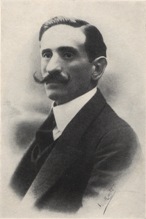
“De padres a hijos” is a novel written by Benito Pérez Armas, and published in 1901. This author was born in the island of Lanzarote, the Canary Islands. I have found very few things written about this author, but there is an article entitled “Benito Pérez Armas: Literatura e ideal regionalista”, by Gregorio J. Cabrera Déniz. It is also possible to find information about him in “La enciclopedia de la literatura canaria” edited by Centro de la Cultura Popular Canaria.

The plot, which occurs at the ending of the century, tells the love story of Víctor and Trina, whom represent the descendants of “los guanches”. In the nineteenth century, the term “guanche” was used to identify the population of the Canary Islands before the Spaniards conquered it. After getting married they had a baby girl, Pinillo. The couple’s happiness is destroyed by the intervention of an evil “cacique”, don Dimas, who is the incarnation of the Castilian conqueror. Dimas tried to rape Trina, and by a misunderstanding Victor thought that she cheated on him. After fighting Dimas and thinking that he killed him, Victor runs away to Costa Rica. However, Dimas did not die, and Trina never cheated on Victor. Several years later Victor found out the truth and returns to the island of Tenerife, but her wife had died of a broken heart, and her daughter was living in a hospice. Ironically Trina and Dimas died on the same day.

The romantic aesthetic and regionalism, which remember the pre-Hispanic culture of the Canary Islands, define this novel. In this novel, Benito Pérez Armas talks about a pure Canarian race, that he calls “guanche”, ignoring the cultural mix that conforms the islands. He not only ignores the fact that each island has its own identity, but also that it has been established by prehispanic cultures and external influences coming from Spain, America and Africa. It is a very short book that can be read in one day. 

Monday, May 6, 2013

“El cuarto de atrás” by Carmen Martín Gaite


“El cuarto de atrás”, published in 1978, is a book written by Carmen Martín Gaite. Francisco Franco Bahamonde, the Spanish dictator, was already dead when that happened, and the country was in the transition to the present democracy. Though Franquism was over, its consequences were still presents in the Spanish intellectual community during the transition, and this novel is an example of that.

“El cuarto de atrás” reminds a little to “Reivinidcación del conde don Julián” (1970), because both books, far from realism, go deep into the subconscious. This one is written in first person and uses the present tense to narrate the plot. It tells a story about a woman called Carmen who can be identified as the author. She went to bed and unsuccessfully tried to sleep, and then several unusual things happened. A man in black visited her, and they started a conversation that helped her to remember the most basic things about her past.  When the book gets to an end, it is hard to say if everything that happened was a dream or something real.

Obviously the memory problems are related to a traumatic experience, such the Spanish Civil War and the dictatorship. But this personal experience goes further to become a metaphor of the entire country, which will start to remember, during the transition, a part of the Spanish History that Franco tried to erase. The article entitled “Re-inhabiting private space: Carmen Martín Gaite's El Cuarto de atrás”, by Carmiña Palerm, points out that “the protagonist can be seen as the transmitter of an oral discourse, a discourse that had been confined to the private space of the household up until the death of Franco” (119). In several occasions, the book talks about using the fantasy to scape away from reality, and that is what the main character did when she was a child, imagining two fantastic places in order to ignore reality: Cúnigan y Bergai.

It is a very nice book to understand some psychological aspects of the Spanish Transition, like the struggles to remember the past, and the confusion of a society that is finally free to look back and share their experiences without fear.

Saturday, April 13, 2013

“Reinvindicación del Conde don Julián” by Juan Goytisolo


  “Reinvindicación del Conde don Julián” (1970) is a very hard book to read. The narrator in this novel uses, most of the time, a second person perspective. One could say that there is an “I” that mirrors a “you”. This book plays with language punctuation (avoiding periods and capitalization at the beginning of sentences) and spelling. This experimentation in writing reminds us of the literature done before the Spanish Civil War. It would be unfair not to point out that this experimentation had started many years before. As stated before in previous posts, books written right after the war avoided formal experimentation, and went back to a very traditional literature akin to the Regime. However, in the 40’s, some novels looked for strategies to innovate and, at the same time, survive censorship (e.g. “La Familia de Pascual Duarte” (1942) or “Nada” (1944)). Little by little, experimentation was more and more obvious, like seen in “La Colmena” (1946), “El Jarama” (1955), “Tiempo de Silencio” (1962) or “Reivindicación del Conde don Julián” (1970). But because of the Regime’s control in literature, some of them had to be published in other countries, like this novel by Juan Goytisolo.  A big difference with other previous novels is that “Reivindicación del Conde don Julián” breaks with realism, just like other books by Goytisolo. This break with realism can be observed in other authors and novels, like in Carmen’s “El cuarto de atrás” (1978). Although Goytisolo’s writing has been influenced by French literature; I prefer to see it as a progression inside the post war Spanish literature.

This book recovers the Moorish invasion of Spain with the intention of its destruction. Full of violence and sex, rapes and treason, it pretends to destroy a Spain that has been built under the Castilian perspective.

Summarizing this book would be very complicated, since it is a journey to the character’s subconscious and there is no clear plot. The novel is divided into 4 chapters, taking the reader deeper, and deeper into the fantasy of the obliteration of the Spanish myth, a Spain that has been built on the imposition of the Castilian culture. The book starts with the character waking up, who then walks the city of Tangier while the narration mixes reality and thoughts. Reality slowly loses space, and the subconscious takes control.